
image searching for other things and this pops up as a result
Kimmel Collection: SES 1974 Dodge Monaco Royal
SES used to be Steam Engine Systems and then became Scientific Energy Systems to make it easier to raise money from investors. Many good engineers worked on this project for about seven years. The money and the project parameters came from the EPA.
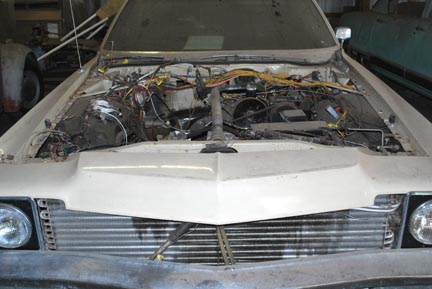
Therefore, the rules were very difficult and much of the work had little to do with making a good and practical steam car. As an example: everything had to fit under the hood, it had to be able to condense all of the steam even under the most extreme driving conditions, it had to withstand a month of freezing weather, it needed to be competitively powered, meaning at least 150 horsepower.
The other rules were equally interesting. For legal liability issues the vehicle was never to run on a public road. Thus all of the tests were done on a chassis dynamometer. The most important part of the project was the successful generation of quarterly reports for the EPA.
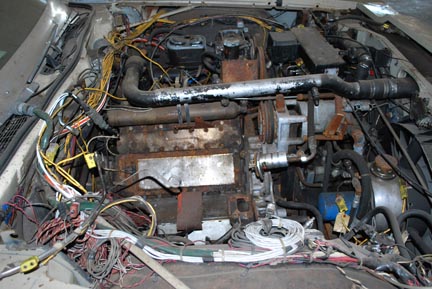
When this was all done and successful the 1973 oil embargo raised the price of fuel and thus the political winds, the ones that had been blowing strongly from the clean air/anti-smog people, changed to fuel economy. For fuel economy a much smaller engine was needed as the purpose was then no longer one of matching muscle car performance while being clean burning. A full sized car needs about 30 hp to maintain freeway speeds on a level road and twice that hp to maintain freeway speeds going up a moderate grade. The SES Dodge had an oversized engine and a boiler (steam generator) that had large air side and water side pressure drops in order to make it compact enough to fit under the hood. A steam car could have been made with reasonable and practical fuel economy; the Jay Carter VW conversion is a good example of that, if that had ever been the goal and if all of these other completely unnecessary rules not been in place.
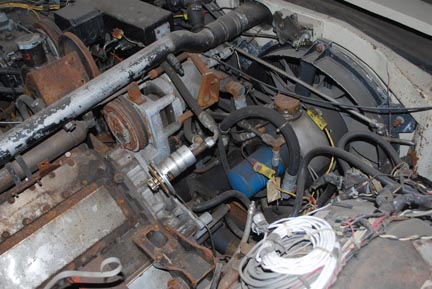
As it was much engineering time and talent was wasted trying to fit everything under the hood, trying to achieve freeze protection, and condensing all of the steam. When going up a hill in Death Valley when it is 120 degrees F the cooling fans absorbed half of the horsepower generated by the steam engine, just to give some example of what the developers were working with.
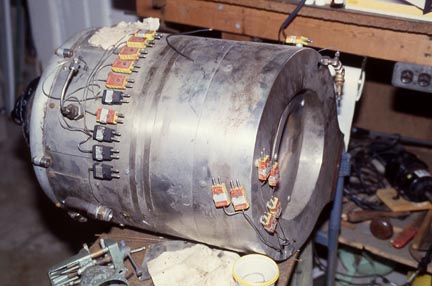
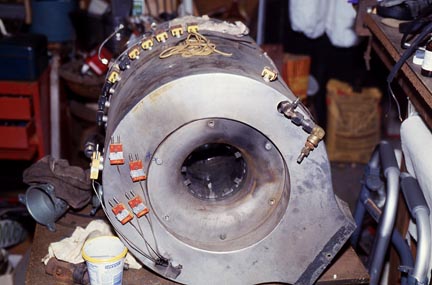
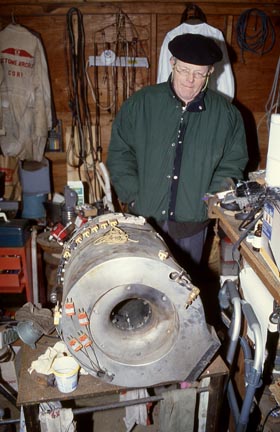
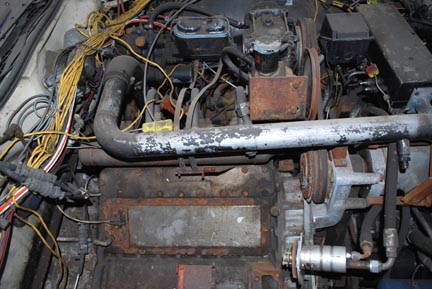
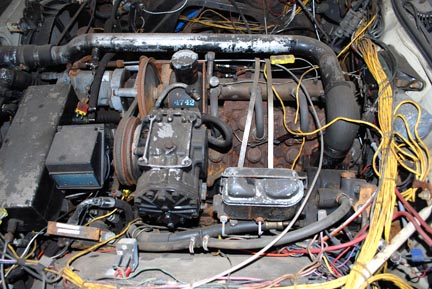
The engine was developed by Ricardo in England and is a four cylinder uniflow poppet valves with two intake valves in series with a phase changing camshaft drive that gave complete cutoff control so that throttling was not needed.
Kimmel Collection: SES 1974 Dodge Monaco Royal
SES used to be Steam Engine Systems and then became Scientific Energy Systems to make it easier to raise money from investors. Many good engineers worked on this project for about seven years. The money and the project parameters came from the EPA.
Therefore, the rules were very difficult and much of the work had little to do with making a good and practical steam car. As an example: everything had to fit under the hood, it had to be able to condense all of the steam even under the most extreme driving conditions, it had to withstand a month of freezing weather, it needed to be competitively powered, meaning at least 150 horsepower.
The other rules were equally interesting. For legal liability issues the vehicle was never to run on a public road. Thus all of the tests were done on a chassis dynamometer. The most important part of the project was the successful generation of quarterly reports for the EPA.
When this was all done and successful the 1973 oil embargo raised the price of fuel and thus the political winds, the ones that had been blowing strongly from the clean air/anti-smog people, changed to fuel economy. For fuel economy a much smaller engine was needed as the purpose was then no longer one of matching muscle car performance while being clean burning. A full sized car needs about 30 hp to maintain freeway speeds on a level road and twice that hp to maintain freeway speeds going up a moderate grade. The SES Dodge had an oversized engine and a boiler (steam generator) that had large air side and water side pressure drops in order to make it compact enough to fit under the hood. A steam car could have been made with reasonable and practical fuel economy; the Jay Carter VW conversion is a good example of that, if that had ever been the goal and if all of these other completely unnecessary rules not been in place.
As it was much engineering time and talent was wasted trying to fit everything under the hood, trying to achieve freeze protection, and condensing all of the steam. When going up a hill in Death Valley when it is 120 degrees F the cooling fans absorbed half of the horsepower generated by the steam engine, just to give some example of what the developers were working with.
The engine was developed by Ricardo in England and is a four cylinder uniflow poppet valves with two intake valves in series with a phase changing camshaft drive that gave complete cutoff control so that throttling was not needed.