Comments - Experiences Using Amazon Basic Type Automotive Sound Deadening Insulation

Sport Fury 67

Active Member
Joined
Mar 7, 2016
Messages
376
Reaction score
438
Location
Buffalo Grove, IL
Planning to replace the carpet in my 1969 T & C wagon this summer. I am going to applying some type of a sound deadening product on the floors and the rear wheel wells to reduce interior noise. Even though its a Chrysler - Ma Mopar did not grace these products with a lot of interior insulation.

I have seen several videos and comments recommending a cost effective product is the Amazon Basic brand - type of sound deadening material. The videos usually show it being installed in modern cars with the purpose to enhance the stereo. I just want to knock down the road noise.

Has anyone used the Amazon Basic product on a C-Body era vehicle? In general, where is the best areas to apply sound deadening; only the floor areas ? Is there any additional gain in insulating the interior of the door skins - panels?

A station wagon will never be limo quiet, but I want to strike a good balance of insulation to lower the noise level inherent of a fuselage C-body without an over-kill. In comparison, my 1978 New Yorker was brimming full of interior insulation EVERYWHERE and the leather seats also helped ; )

Planning ahead for warmer and less snowier days.

Amazon.com

1969 T@C Wagon .jpeg
 
In response to your post, I threw some things into google, I got this:


Besides watching the video on that page (very impressive test setup) my gut feeling is that product mass (per square inch or what-ever) is going to be the main determinant of how good the material is for sound deadening. And do you want to add what, 100 lbs of extra weight to your car? And the material must stick or be bonded extremely well to the metal panels to be useful. Are those topics discussed by that guy on his site? Are they discussed on car audio forums? I have no idea.
 
Dynamat is the most known name for sound deadening and heat insulation. Personally it doesn't matter if it's Dynamat, Kilmat, Siless or something generic. Anything is better than what came from the factory. Which was nothing. Most of these are self stick and come with a roller to flatten and force it into every bend and roll. While I have never installed it inside of doors, I always get it as far under the dash, up the firewall as possible. Trying to block as much engine heat as possible.
 
I put sound deadening material on my Barracuda Fastback, would not do it again.
1. It is heavy, 100# plus depending on the car and installation.
2. Negligible improvement
3. The sound of these old cars is part of the alure to driving them.


Alan
 
Well, the cars DID have insulation in them, just not to the level of modern cars, by a long shot.

What you are seeking to do is to remove panel sympathetic resonances more than anything else. The factory jute backing on the carpets do a pretty good job of that, plus some heat insulation.

Chrysler's main player in "sound deadening" was the factory "Undercoat and Hood Pad", which should be standard on their upper level models and optional on others. Undercoat on the underbody and rear wheel wells, plus the fiberglass blanket on the underside of the hood (which also decreased engine heat on the hood's outer paint!).

The body/frame GM cars usually rode quieter on most roads, when on a dirt or gravel road, the items striking the underbody were VERY obvious compared to our Chrysler with the factory undercoat and hood pad. As GM normally only put a spritz of undercoat on the rear wheelhouses and not the under body.

I suspect there might already be some spritzes of spray undercoat on the inner sides of the door skins. For that "panel resonance" issue. Gives a more "quality sound and feel" to the door closing, rather than it sounding like an empty 55 gallon barrel. There should be a thick fiberglass/jute insulator pad on the rear of the cowl, inside the car. Not sure you could improve on that, unless you added the DynaMat-style adhesive panels there, cut to fit.

What you CAN do is get some OEM-spec spray-on undercoat, but NOT in a spray can (too thin). Re-coat the entire underbody. There is also a product named "Lizzard Skin" which has a ceramic component in it to deflect heat. It's main benefit is heat control, with sound control in the mix, too.

Once you get the panel sound items fully stiffened-up, I suspect that can remove a great deal of "road noise" (which Chrysler products always had more of due to their UniBody construction, back then).

Once you get the road noise issue more under control, then you'll become more aware of "wind noise" from the A-pillar area. There ARE a few things you can do ti decrease that. PM for what I did on our '66 Newport Town Sedan.

I concur that the DynaMat-style sound deadeners appear be "all the same", BUT there can be differences in the softness of the rubber AND the thickness of the rubber. Thicker and softer being better, I suspect. ONE thing I would do prior to using such products, is to FIRST get some body seal sealer and fill in the beads in the floorpan sheet metal, on the inside. Filling them completely and smoothing them wiht a gasket scraper for smoothness. Then, that would make the "sticking" of the DynaMat-style panels easier to do PLUS providing additional stiffness to the metal at the same time. Be aware, too, that the added build thickness of these absorbers might make the carpet fit looser in some areas.

As for the roof . . . that is ONE huge area where insulation can be added. There should be some sections of jute up there already, but by no means "full coverage" over the front seats. But taking the molded panels out of the rear section might be very BAD (for the panels and their "retention devices").!

Now, as "noisy" as the car might now be, the first time I road in a friend's '68 Road Runner coupe, I expected it to sound about the same as our '66 Newport, but as soon as he hit the starter, I was shocked at how loud it was. As if it was on the other side of a piece of sheet metal rather than an undercoated one. More road noise, too. This was in about 1969, when both cars were still pretty new.

I had also been around some Fury I sedans, so I knew they were louder than our Chrysler, too. Lack of insulation and factory undercoat.

Back then, a Chrysler dealer who knew to order the factory undercoat and hood pad option could perpetuate the orientation of "noisy and tinny-sounding" cars or they could have cars that were more normal, when compared to GMs and especially 1965+ Fords.

Sorry for the length,
CBODY67
 
A lot of noise comes from the tyres. You can use spray on sound deadening, Boom Mat Spray in the wheel arches and areas where it's difficult to put butyl mats.

I have watched a lot of videos on sound deadening a car, one of the main conclusions is often you don't need to cover all the panels, the butyl mats to stop vibration and drumming sound. A couple of mats on each panel has a noticeable effect.

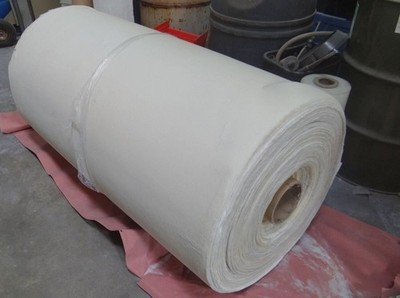
If you use AC, then an insulation layer will save fuel and improve the AC's performance. The ultimate is Aerogel. This is ultra thin and lightweight. Yet provides the equivalent of 4-5 inches thickness of foam. Sold in various rolls and sheets. It's expensive and can be dusty so needs to be covered over.


Screenshot_20260201_081354_eBay.jpg


Screenshot_20260201_084628_eBay.jpg
 
Back
Top