Tool tips

I modified these old screw drivers to be small pry bars for getting into tight spots:
PXL_20250217_192159082.jpg
 
I use this crude simple holding tool for holding the brake pedal down when I am bleeding the brakes using the pedal pump pressure method by myself. Pump up the pedal, then wedge the stick between the pedal bar and a seat track or bottom rail. It fits most of the cars I have. I've considered buying a good adjustable metal tool made for that, or just making a better tool, but this simple wood contraption always works for zero cost.
PXL_20250217_192759992.MP.jpg
 
I use this crude simple holding tool for holding the brake pedal down when I am bleeding the brakes using the pedal pump pressure method by myself. Pump up the pedal, then wedge the stick between the pedal bar and a seat track or bottom rail. It fits most of the cars I have. I've considered buying a good adjustable metal tool made for that, or just making a better tool, but this simple wood contraption always works for zero cost.
View attachment 706755
Ha
I would instantly die if I told my wife that she was replaced with a stick.
 
A scrap 8-3/4" "489" differential crush sleeve makes a good driver for seating front hub grease caps into the hub recess.
View attachment 706745

It fits 3580894 caps on 1973 and later cars perfectly.
View attachment 706746

It also fits the earlier 1613416 caps, but with some play, so a little more care in centering is needed.
View attachment 706747

View attachment 706748

It doesn't fit the small caps used on 9" brakes, nor the larger caps used on trucks, etc.

Left=small, middle=3580894, right=large:
View attachment 706744
I have an old hole saw bit with teeth ground smooth to seat the caps. Good solid end to hit.
 
A slightly bent, long screwdriver is surprisingly useful. I remember finding one on top of a cupboard in a house, it's helped me quite a bit in my wrenching adventures.
I'm sure for those here that are married, their other half will also know the benefits of a slightly bent, long screwdriver.
Those inland shifter tools, the juvenile in me desperately wants to change the F on one of them to a different letter haha
 
Modified wrench for removing the gauge type oil sending unit from a small block with the engine in the car. Particularly useful in a cramped A-body. Can be used on a big block too, but it's not the same access issue as a small block. Made from a drop forged steel, but relatively soft alloy, Gedore brand 9/16" combination open/box end wrench. The wrench was made and modified in the late 70s or early 80s.

PXL_20250418_004418917.jpg
 
Last edited:
For cleanly driving a tight oil dipstick tube out of a block, without damage, with the oil pan is off, I made a tool using a 5/16" bolt with the threads cut off, and the end ground flat and perpendicular to the shaft.
PXL_20250427_225421670.jpg


I used the tool to remove a tight dipstick on my badly corroded and stuck 360 today.
PXL_20250427_222937251.jpg


To use the tool, first, place an 11/32" box end wrench on the bolt, in case it gets stuck, to knock it back out. Then, insert the tool in the inner hole through which the dipstick enters the oil pan. Using a small hammer, for better control, tap the tube out.
PXL_20250427_225323574.jpg

Light, precise taps, while holding the bolt shaft to feel for anything not moving as expected, are better than heavy taps. Some side pressure on the shaft might be needed if the tool is not catching the edge of the tube well.

This tube was tight in the 360, but it only took eight or nine taps to knock it out, with no damage to the end of the tube
PXL_20250427_225404902.jpg


This was on a 360, but it works on any small block or big block.
 
Temporary wiring to start a car when it has some basic components in place, but no wiring or just partial wiring. I assembled it for Chrysler electronic ignition and it can be used with a 5-pin ECU or 4-pin ECU. It uses different terminals to connect to various jumper connections, including the ECU plug for flexibility. It can be used for points ignition too. The ignition switch is an NOS aftermarket switch (Kem UL6-2) for 1960-1968 models.
PXL_20250501_215155429.jpg
 
I was looking for a test light to carry in the trunk. I had used a cheap Harbor Fright multimeter and those are pretty good for that use, but there's a 9 volt battery that I never think about changing and you know the first time I really need it, it will be dead.
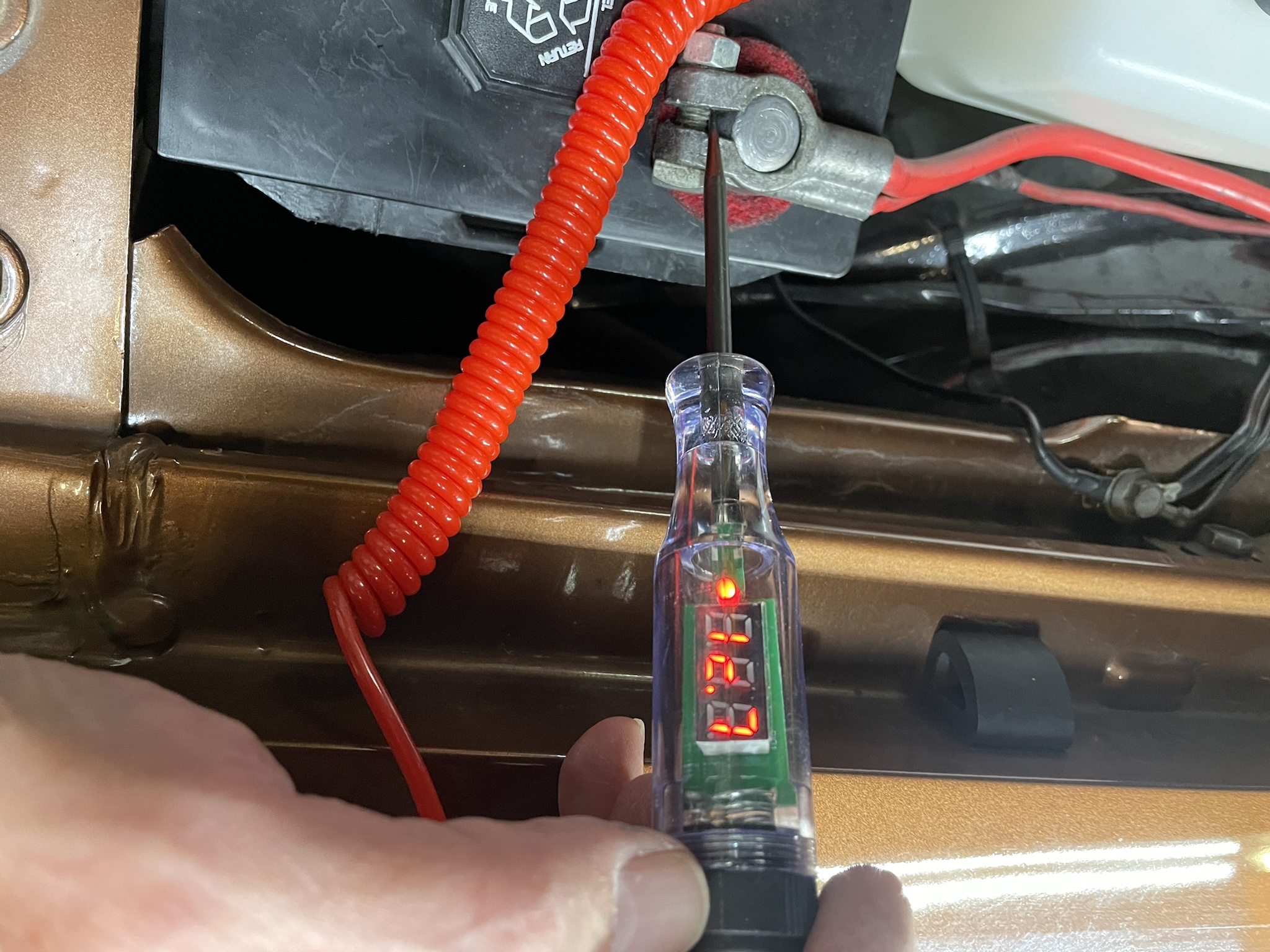
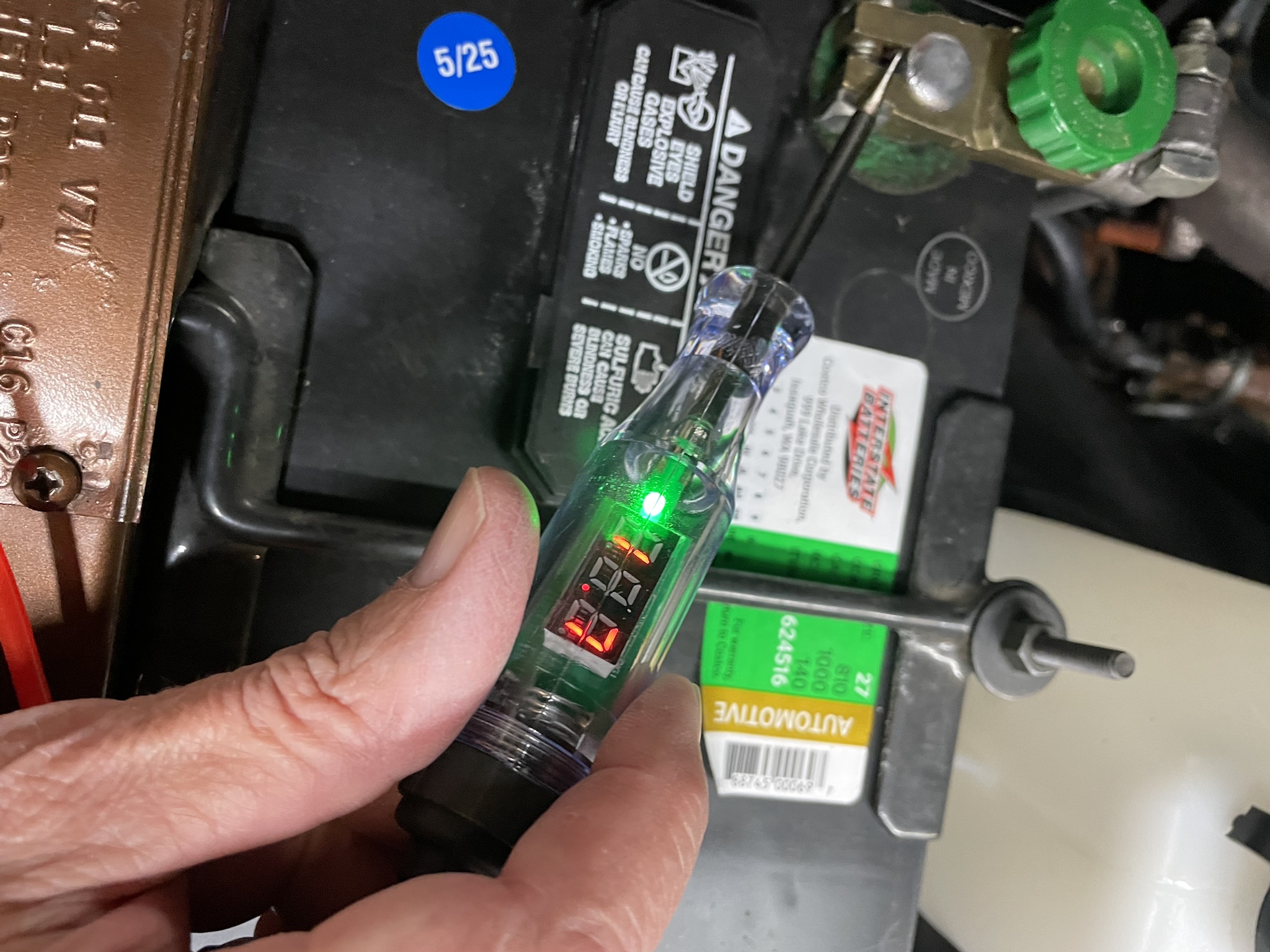
So... While I was at the Syracuse Nationals and looking through the bins of cheap tools, I spotted a test light that doubled as a voltmeter. I thought that was interesting, but then I discovered that it doesn't need a battery. Instead it uses power from what you are checking. At $10, I bought one and took it home. After fooling around with it, I found that it worked as promised, and did one other thing.... It showed polarity with an LED in the handle. I would have preferred if it lit green for correct polarity instead of red and red for reversed, but it's not a big deal.

EEM1QK2.jpg


The "2" is lit, just not showing on this pic for some odd reason.
xGyJAQu.jpg


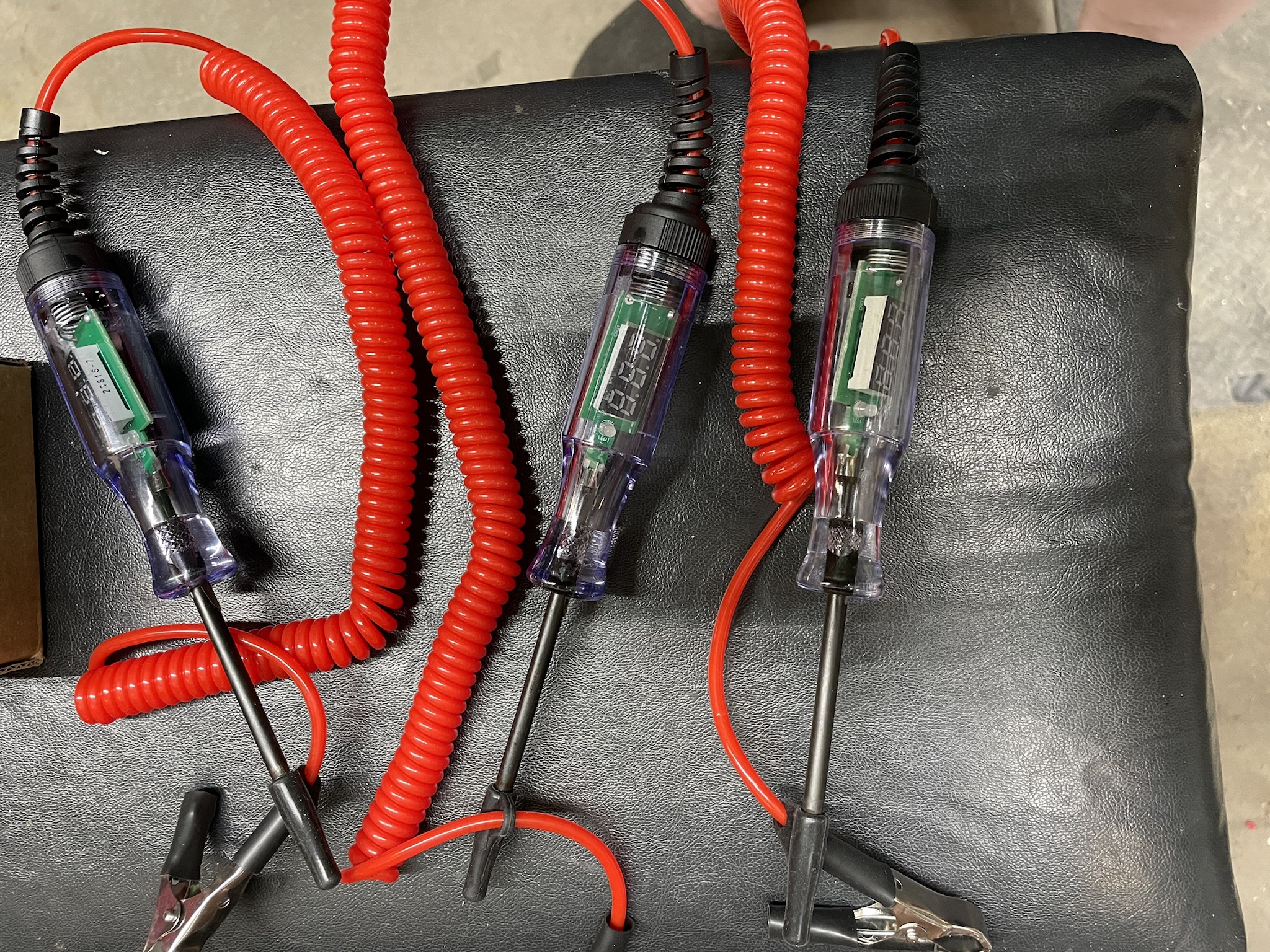
I liked it so much, I found two more on Amazon for under $6 each.

aU9cz8O.jpg


https://www.amazon.com/dp/B0BWRQ491Z?ref=ppx_yo2ov_dt_b_fed_asin_title
 
The "2" is lit, just not showing on this pic for some odd reason
The refresh rate of the LEDs is out of sync with the refresh rate of the camera sensor (usually digital camera sensors have an exposure time of around 1/60th of a second, more than enough to pick this up), same reason why many car LED blinkers or even headlights in video playback appear to flash really quickly or at odd intervals.
 
The refresh rate of the LEDs is out of sync with the refresh rate of the camera sensor (usually digital camera sensors have an exposure time of around 1/60th of a second, more than enough to pick this up), same reason why many car LED blinkers or even headlights in video playback appear to flash really quickly or at odd intervals.
I figured it was something like that. Thanks for the explanation!
 
Years ago, I started storing my automotive fasteners and other hardware in coffee cans. I have amassed a lot over the years. I built shallow shelves for the cans. There have been a few iterations, but for the last 25 years, the cans have resided on shelves made from 5/4" deck planks. It's simple, quick, reasonably strong, and fits the cans well. I paint the cans with primer and just write what is in them right on the can with a marker. If I change can contents, I can spray them again, and re-label. To ease the digging through the cans, we made some metal pans. Dump the can into the pan, dig for the right bolt, nut, etc. then, with the chute part, sized for the cans, dump the pan back into the can. The cans store much stuff, but there are many parts drawers cabinets as well.

The pans:
PXL_20250825_234856346.jpg


The cans:
PXL_20250825_235028546.jpg
 
This is probably something you all have seen before, but Mrs. Big John added a twist to it when she saw what I was doing...

I have a magnet on a stick that came from Harbor Fright. Since I dumped a box of drywall screws on the garage floor, it was the perfect tool to pick them up under the bench and kind of "sweep" the area for others. They're cheap.. $7.

1760824360978.png


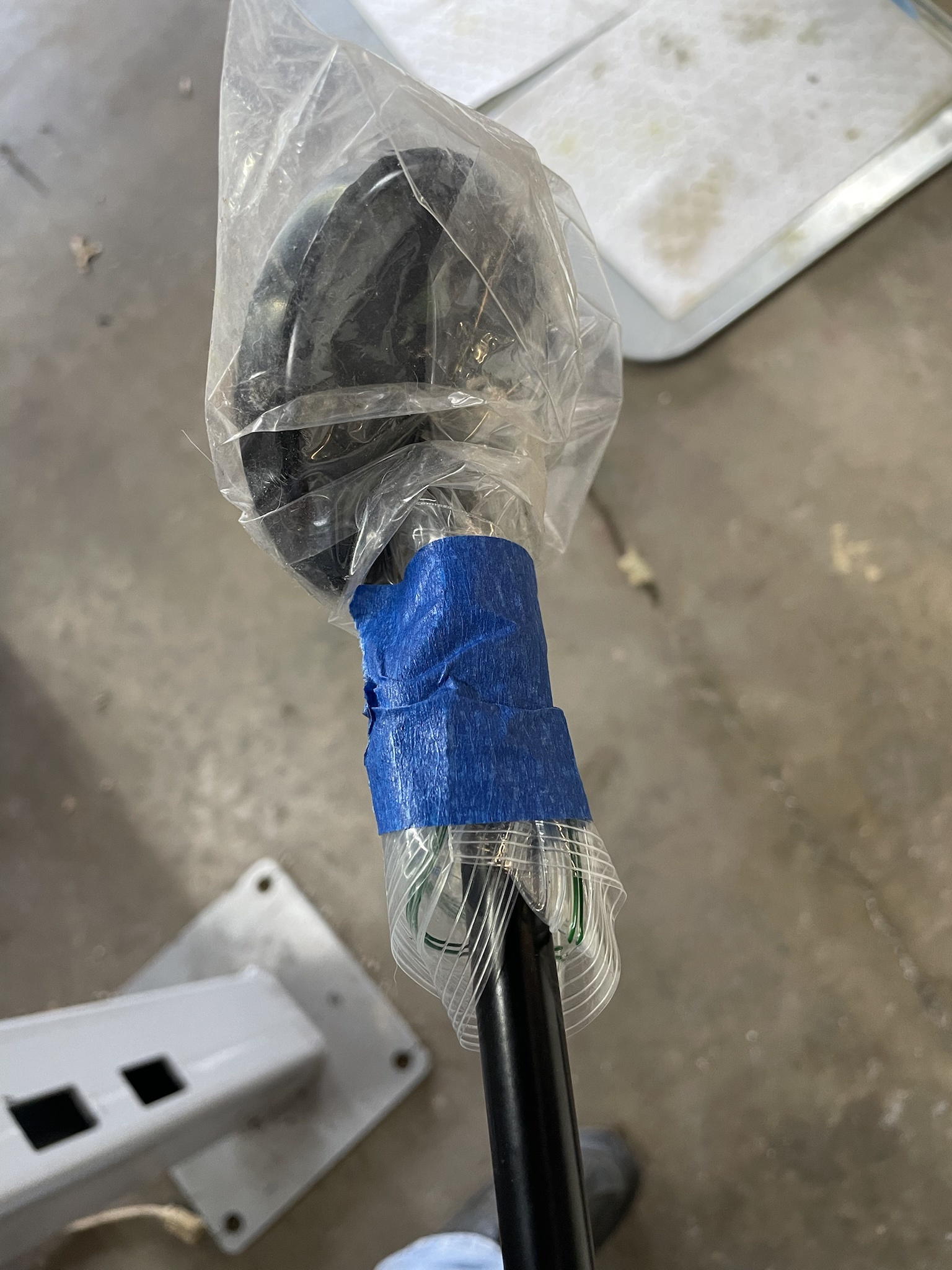
I put a plastic bag on the end and use a rubber band or tape to close it up. This keeps any other crap, like the dust on the floor around my grinder, from attaching itself to the magnet.

cpsVzuD.jpg


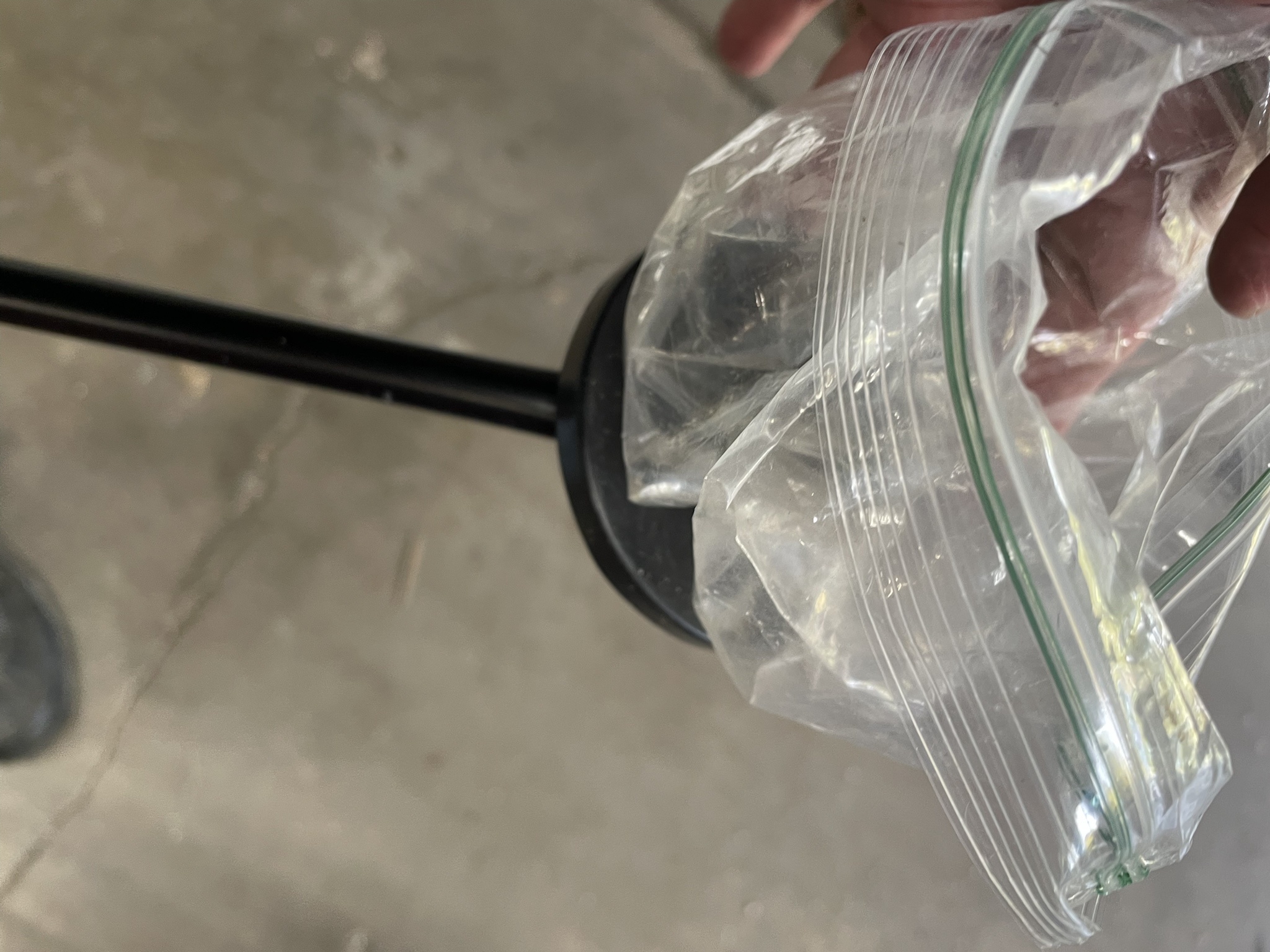
Nothing new about that tip.... But Mrs. Big John said "when you're done, just take off the rubber band and pull the bag down and all the screws will be in the bag".

One of the many reasons why I married her... She's a freaking genius.

6LDAXBu.jpg
 
Funny you post this today - the other day I was drilling a hole in the dash and used an old speaker magnet a bit smaller than a hockey puck, with toilet paper wrapped around it to pick up all the shavings from the carpet. worked a treat.
 
This doesn't require a tool, but it's a surprisingly useful tip that learnt from a friend years ago.

If you ever drop something small, like a screw, nut, etc. they have a habit of disappearing from your view like magic and are hard to find. But if you take another of the same item and drop it from the same place in the same orientation, there is a good chance it will land in the same general area as the lost one. I did this just the other day when I dropped a nut from an exhaust flange while working under the car. I wasn't watching when it hit the ground and had no idea where it rolled to. I looked around 360 degrees from where I was standing but couldn't see it. So I dropped another one from the same spot and it hit and rolled across the floor. The lost one was under a cart within 2 feet of where the second one came to rest. I tried it two more times just to satisfy my curiosity and each time it rolled in the same general direction!
 
I also just the other day thought of a little trick to measure the clearance from the top of the air cleaner to the hood/padding. I made a loosel wad of aluminum foil and sat it on the top of the air cleaner and closed the hood on it. Upon opening the hood, it was squished down to reveal the size of the gap.
 
I was looking at how guys jack cars on 4 post lifts. Example... Removing wheels for brake work. I've tried a few ways and while I get the job done, I thought there might be another way without buying the $1500 bridge jack that would be in the way.

This popped up and it's a bit "out of the box" thinking. Still have to be careful and I would use 2 jack stands.

 
Back
Top